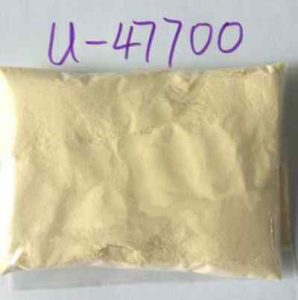
The enigmatic substance, commonly referred to as U-47700, initially lacked a official designation beyond its research identifier. Its authentic chemical name is N-(3-hydroxyphenyl)-N-[1-(4-methoxyphenyl)propan-2-yl]acetamide, a somewhat daunting designation reflecting its synthetic origin. Developed in the early 2000s by Dr. Unna at the Institute of Bonn in Germany, U-47700 was originally synthesized as a potential experimental analgesic, acting as a potent agonist for the kappa opioid receptor. Its genesis stemmed from efforts to find alternative pain relievers – a quest that ultimately led to its present notoriety far removed from its planned therapeutic use.
Unraveling the Common Slang for U-47700
U-47700, a synthetic drug, is often called by various code names, making identification difficult. These informal labels shift frequently, complicating attempts to understand its presence. Users and dealers might use phrases like “Pink,” alluding to its original form ; “Blue Joker,” a combination possibly linked to a particular production ; or simply “U,” a shortened version of the chemical’s name. Such important to recognize that these nicknames are fluid and can change geographically and over durations.
- Rose
- Blue Joy
- U-Four
What Do U-47700 Products Seem As An Visual Explanation
Understanding what appearance of U-47700 tablets can be challenging, as they are often produced in varying sizes by various illicit laboratories . Commonly, these compounds are found as small rectangular pills , but variations are frequent . You might find them in hues ranging from white to gray . Occasionally , they can also be pink, although these colors are less common . A size is typically approximately 5-8 millimeters in size and about 2-4 millimeters in width . Note u-47700 intoxication that this is just a common overview and the precise appearance can change significantly.
The Dark Web & U-47700: Examining Online Sales
The shadowy realm of the dark web has become a notorious platform for the illegal exchange of dangerous substances, most recently drawing attention due to the presence of U-47700, a potent opioid. Reports reveal a surprisingly accessible system where individuals can purchase this and other synthetic drugs, often with limited oversight or regulation. This occurrence raises serious concerns about public health and the simplicity with which harmful substances can be circulated globally, prompting agencies to heighten their efforts to dismantle these online activities.
U-47700: Understanding the Dangers and Acquisition Process
U-47700, a research substance, presents extreme risks to users who consider to purchase it. Its potency is believed to be considerably more than that of morphine , making just a small amount likely deadly . Absence of thorough research on its lasting impacts and uncertain reactions with other drugs contribute to its substantial risk. As a result, trying to purchase U-47700 is seriously discouraged and poses a serious danger to well-being .
Transcending the Identification: Exploring the True Identity of U-47700
U-47700, initially recognized as a research chemical compound, quickly became something far more troubling. Dismissing the straightforward label obscures the weighty implications of its actions and potential effects . Instead of concentrating solely on its chemical structure, a deeper examination reveals a peculiar ability to interact with the opioid receptor system, generating effects that are considerably more potent than many established analgesics. Understanding its true disposition requires moving beyond the superficial grouping and delving into the physiological functions that underpin its unique activity . This demands a holistic approach, considering not just its chemical properties, but also its influence on physiological systems and its function within the larger context of opioid pharmacology.
- Additional study is essential to fully understand its entire scope .
- Responsible concerns surrounding its misuse are of utmost significance .
- Public awareness regarding its hazards is vital for mitigation of detrimental effects.